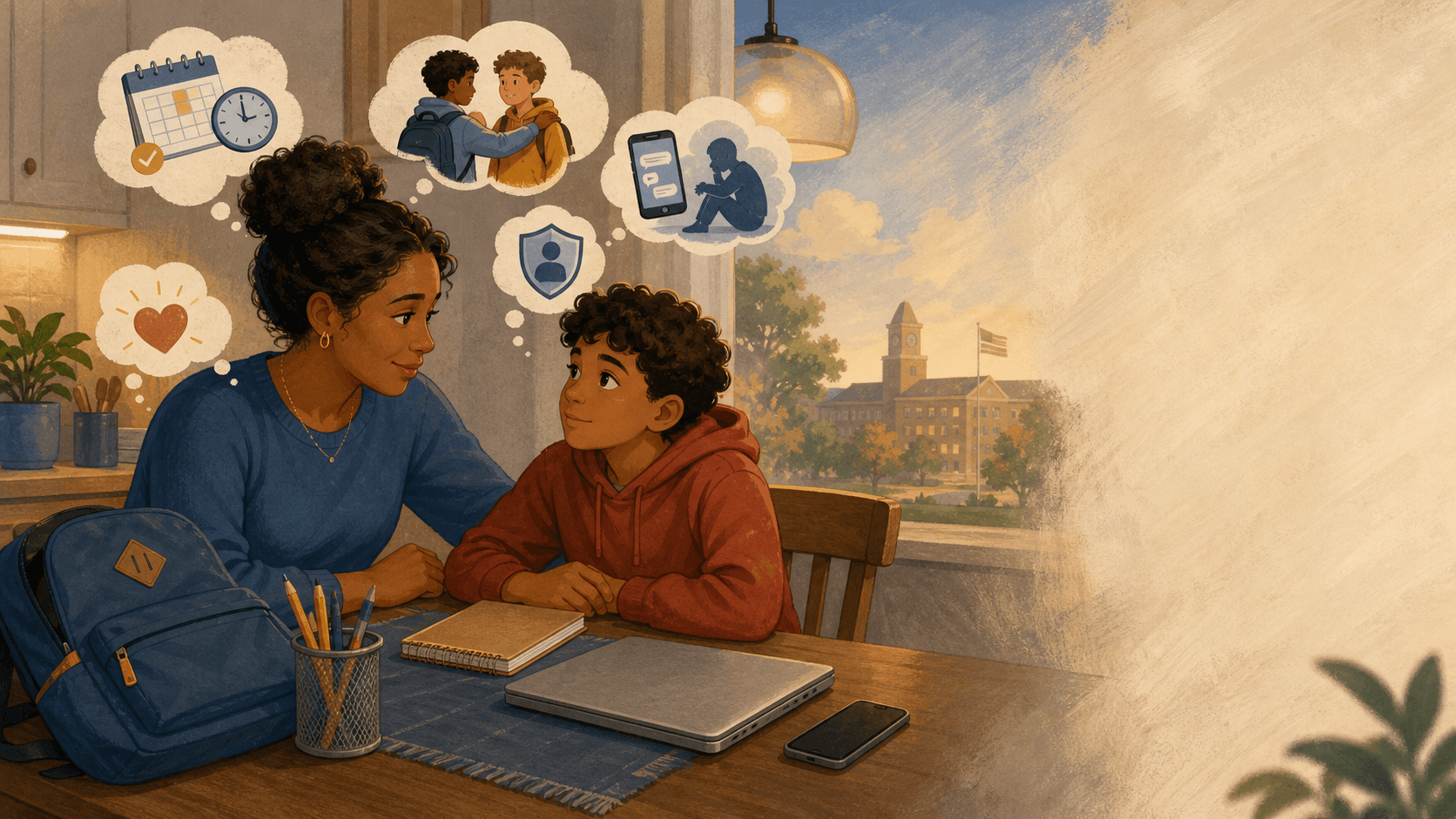
Frisco ISD students return on Wednesday, Aug. 12, 2026. In Frisco, that date tends to arrive with more than the usual first-day nerves. It also brings the quick return of carpools, practices, lessons, homework, long evening drives and calendars that suddenly feel overbooked.
That is why back-to-school preparation in Frisco is not just about getting ready for class. It is about protecting a little steadiness before the year starts moving at full speed.
Parents do not need a perfect family system before Aug. 12. They do need a clear one. A few honest conversations now can do more for a child than another rushed trip to buy supplies: how evenings should work, what to do when friends get cruel, what counts as cyberbullying and where AI crosses the line from help into dishonesty.
Reset the evening before the year resets you
In a city like Frisco, one of the easiest traps is letting the calendar decide everything. Once school starts, evenings can disappear quickly into traffic, activities and the feeling that every hour already belongs to something.
That is why the first good parent question is not, "What is the ideal routine?" It is, "What routine is realistic in our house once the week gets crowded?"
Maybe the answer is a firm charging spot for devices. Maybe it is a homework start time that happens before everyone is exhausted. Maybe it is a bedtime reset that starts a week early instead of the night before classes begin. Small decisions like that matter because they remove the friction that turns school nights into arguments.
Stanford education scholar Denise Pope has spent years warning against confusing pressure with preparation. Her work is a helpful reminder for Frisco families: if a home routine makes children feel supported and more capable, it is doing its job. If it just turns the house into another pressure zone, it probably needs rethinking.
Help children name bullying before they face it
Children often know when something feels bad. They are less sure when it counts as something serious enough to tell an adult.
So this is a good week to help them name it. Repeated humiliation. Deliberate exclusion. Intimidation that keeps happening. A classmate getting targeted until it becomes part of the social atmosphere around them. Those things are not just "kid stuff" children should quietly endure.
Ask specific questions. What if a child at lunch keeps getting mocked? What if a group decides one student is the easy target? What if your child is not the one being hurt, but can see it building anyway?
Sameer Hinduja of the Cyberbullying Research Center has written that children benefit when parents combine warmth with structure and clear expectations. That matters here. Children are more likely to speak up when home feels both safe and serious: safe enough to tell the truth, serious enough to do something with it.
In Frisco, online life is part of school life
For many students, the social part of school does not stop when they leave campus. It follows them into group chats, gaming chats, private messages and screenshots.
Parents do not need to know every platform name to understand the risk. What matters is helping children think ahead. If a group chat turns mean, what should you do? If someone reposts something humiliating, what then? If a "joke" starts to feel like organized cruelty, how do you know the line has been crossed?
The American Academy of Pediatrics advises parents not to make device removal the automatic first move when a child reports online bullying. In guidance from Dr. Megan Moreno, the concern is practical: if children think honesty leads straight to punishment, they may hide what is happening next time.
A better message for Frisco families is this: show me first. We can decide together whether it needs to go to a teacher, a counselor, a principal, a platform or, if it rises to that level, the police. The important thing is keeping the door open long enough for children to actually use it.